Beyond Cooling Fins: Demystifying High Thermal Conductivity Aluminum Alloys in the Cooling Revolution for AI & 5G Communication Housings
Date: 2026-09-24 / Views: 40 / Category: What is Die Casting?
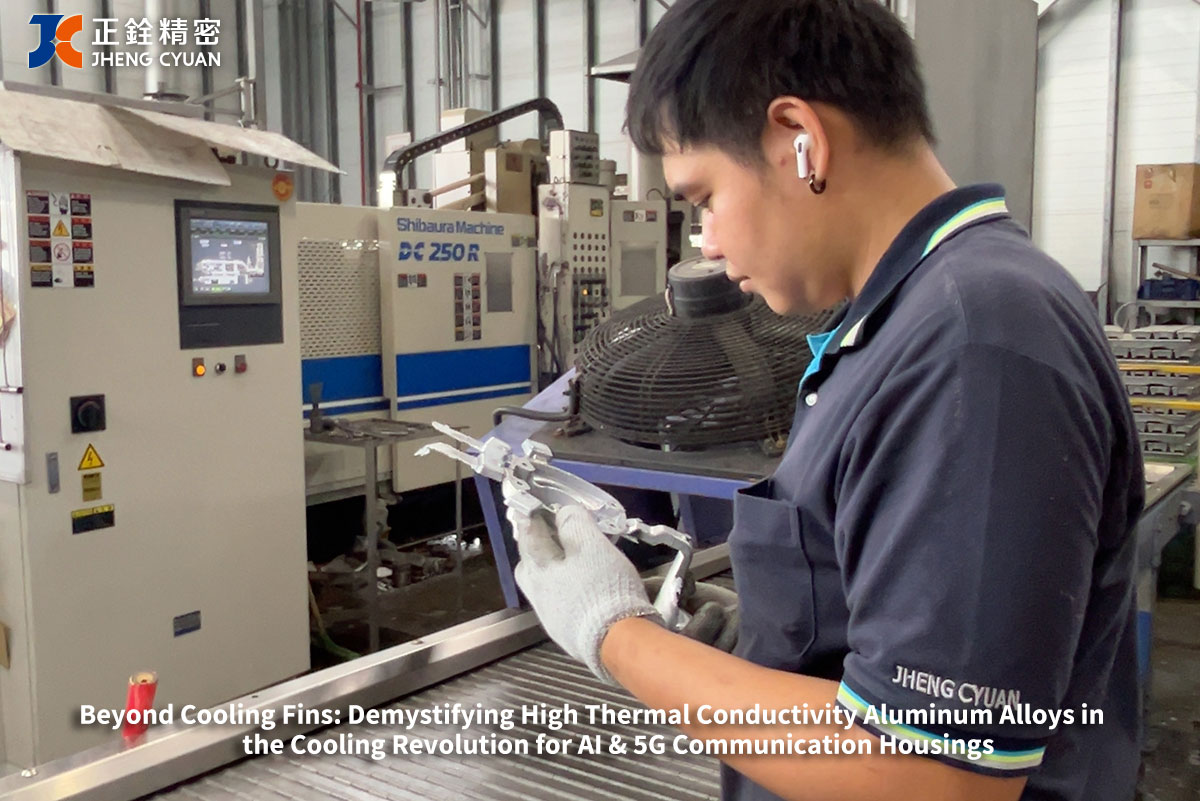
As 5G technology proliferates and AI edge computing advances at breakneck speed, the performance of electronic components is multiplying, but power consumption and heat generation are also soaring at an unprecedented rate. For many communication equipment manufacturers, the traditional "cooling fins plus fan" combo is gradually becoming insufficient to cope with these "electrical volcanoes." The solution core cannot remain only at the surface of mechanical design; it must delve deeper into the union of fundamental materials and tooling craftsmanship.
JhengCyuan Precision Die Casting is deep-diving into the latest leverage in high-end housing manufacturing in our September technical share: Specialized High Thermal Conductivity Alloys innovative application.
The Cooling Bottleneck: Data vs. Materials
The operation of 5G base stations (AAU/BBU) and AI computing chips demands extremely high-intensity Heat Dissipation Density (Heat Density). If heat cannot be rapidly conducted from the chip surface to the exterior of the housing, it will lead to thermal throttling, severely impacting signal transmission stability and lifespan.
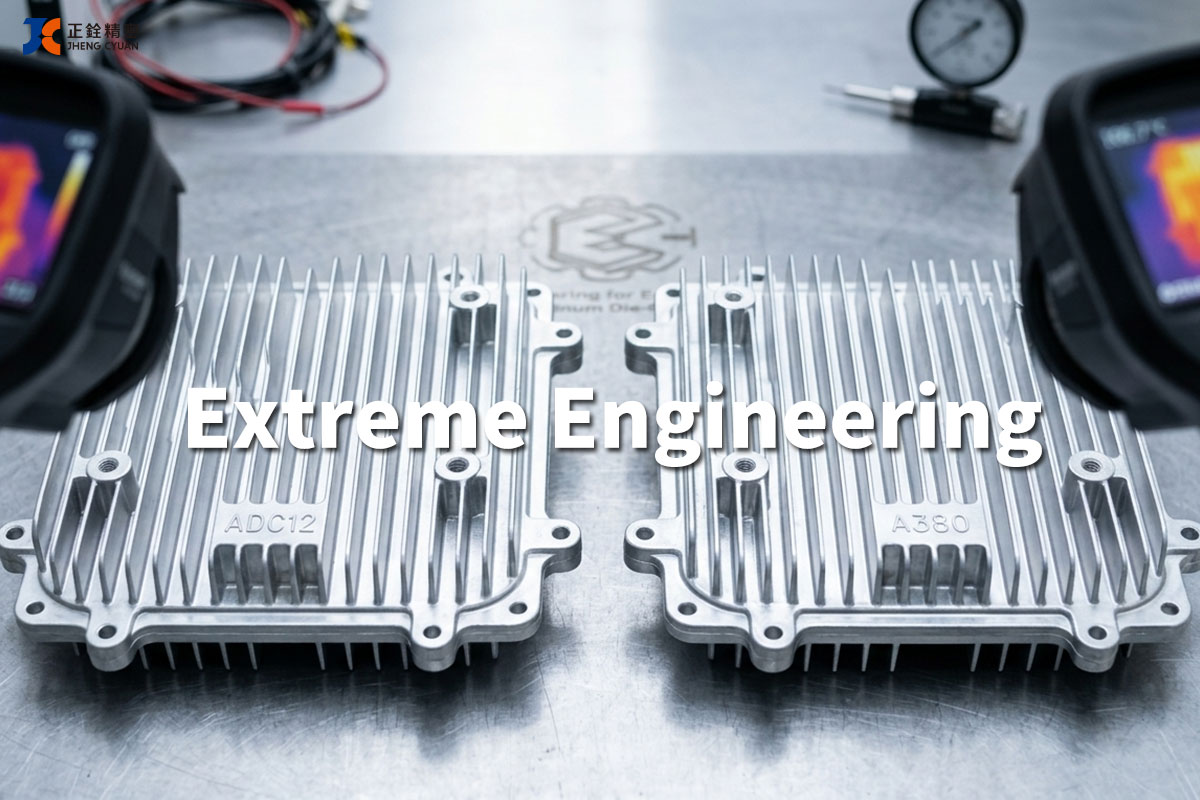
The traditionally ubiquitous ADC12 aluminum alloy used in die casting has a thermal conductivity (Thermal Conductivity) of approximately 96–100 W/m·K. While more than adequate for 3G/4G equipment, against 5G and AI edge chips with power consumption often in the hundreds of watts, ADC12's own conduction speed has become the system's single greatest cooling bottleneck.
The Rise of High Thermal Conductivity Alloys
To break through this limitation, Cheng Chuan is committed to introducing specialized high thermal conductivity aluminum alloys (e.g., Al-Si-Fe-Mn-Zr series alloys), whose thermal conductivity typically reaches 150–180 W/m·K or even higher. Numerically, this represents a more than 50% increase in conductivity performance compared to traditional base materials.
This performance increase brings a significant "Heat Spreading" effect:
-
Eliminating Hot Spots: High heat can be distributed more evenly and rapidly across the entire surface of the die-cast housing, rather than accumulating at specific locations.
-
Optimizing Esthetics: While maintaining the same heat dissipation area, fin height or density can be reduced, thereby shrinking the device volume (Net-Shape Casting) and achieving a more esthetic and sleek housing design.
Jheng Cyuan Precision Integrated Craftsmanship: Moldflow Simulation & DFM Optimization
However, introducing new materials is no simple task. High thermal conductivity aluminum alloys often imply poorer fluidity and different shrinkage rates, which easily lead to "Cold Shuts" or internal shrinkage porosity during the die casting process.
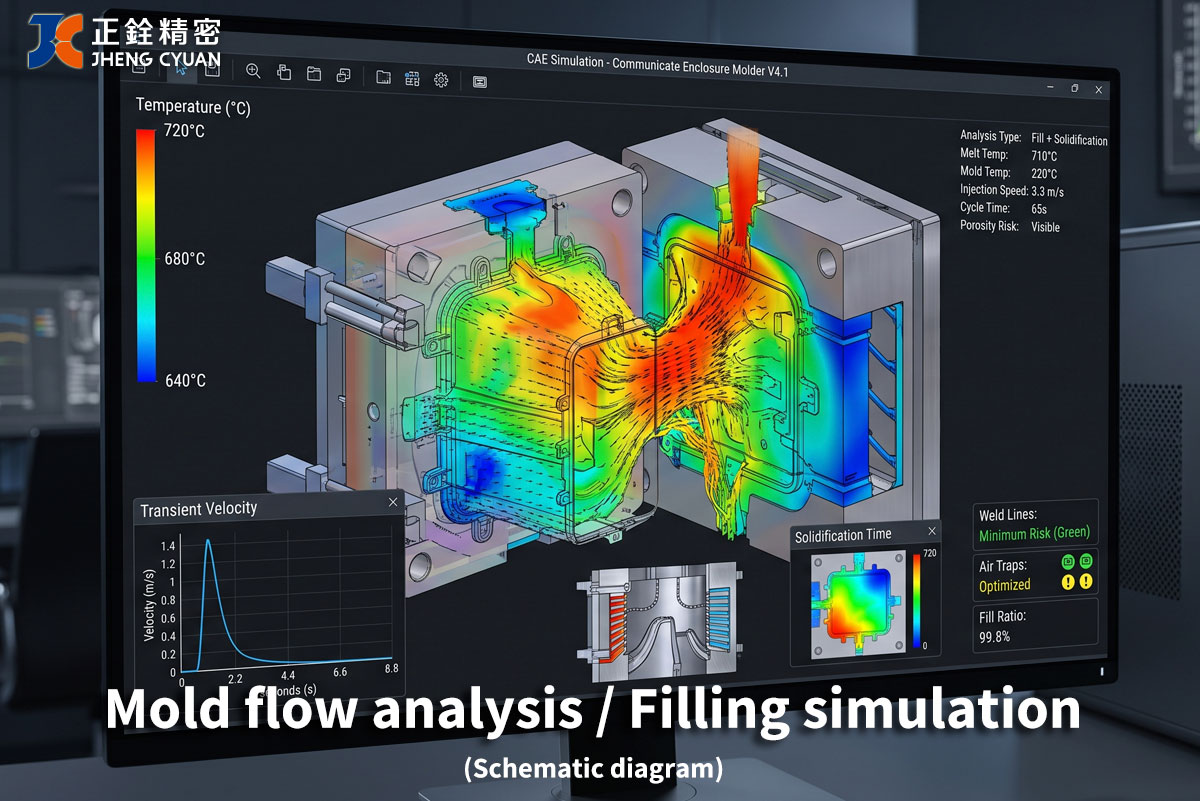
This is precisely where JhengCyuan Precision core competitiveness lies. Our engineering team introduces CAE Moldflow Simulation and DFM optimization at the earliest design stages:
-
Scientific Tooling: Through simulation analysis, we precisely layout runners (Runner) and gates (Gate) to ensure that aluminum molten alloy fills the mold cavity rapidly, even in extremely thin fins and complex structures.
-
Quality Prevention: Optimizing venting system (Ventilation) design forcefully drives out gas from the mold cavity, preventing subsurface porosity from impacting IP68 airtightness and surface adhesion.
JhengCyuan Precision an integrated service from design assistance, mold R&D, and precision die casting to machining. We are not only providing customers with luxury-grade craftsmanship but also the sturdiest performance and cost technical leverage for your new 5G and AI products.