Is Heat Resistance and Thermal Deformation Good for Aluminum Die-Casting?
Date: 2026-01-24 / Views: 284 / Category: What is Die Casting?

Overall, aluminum die-casting parts exhibit excellent resistance to thermal deformation. This characteristic is a primary reason why they are the industry standard for high-heat environments, such as automotive engines, LED heat sinks, and telecommunications base stations.
However, "good" is relative. Here is a breakdown of their performance from three perspectives: physical properties, limitations, and optimization.
1. Why Aluminum Die-Casting Excels in Heat Resistance
The popularity of aluminum alloys in high-temperature applications is due to several key physical traits:
-
Superior Thermal Conductivity: Aluminum efficiently dissipates heat. By preventing "hot spots," it reduces localized thermal stress and the resulting risk of warping.
-
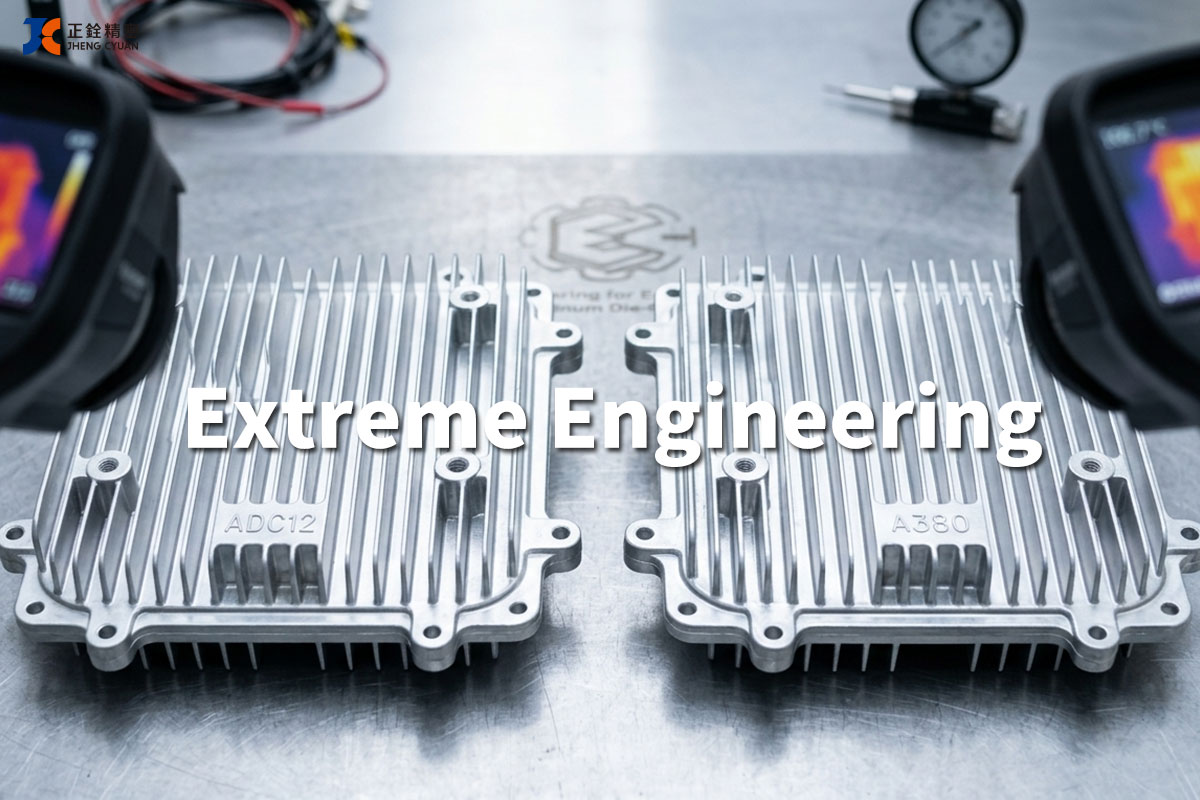
Dimensional Stability: Common die-casting alloys (like ADC12, A380, or A356) maintain their shape and mechanical integrity within standard operating ranges of 150°C to 200°C.
-
Lower Thermal Expansion: Compared to engineering plastics, aluminum has a significantly lower coefficient of thermal expansion (CTE), meaning it expands and contracts much less during temperature fluctuations.
2. The Limits of Aluminum Performance
While robust, aluminum is not invincible. Engineers must consider the following "thresholds":
-
Softening Point: Once temperatures exceed 250°C (approx. 480°F), the mechanical strength (tensile strength and hardness) begins to drop sharply. Under heavy structural loads, the part may experience permanent creep or deformation.
-
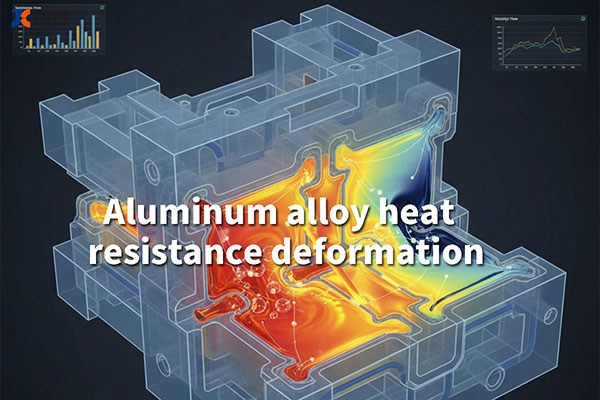
Residual Stress Release: The high-pressure die-casting (HPDC) process can trap internal stresses. Prolonged exposure to high heat can act as a "stress relief" process, which might cause the part to warp slightly over time.
-
Blistering: If the casting has internal porosity (trapped air), extreme heat can cause the gas to expand, leading to surface blisters.
3. Strategies to Enhance Thermal Stability
For applications requiring extreme precision under heat, manufacturers use several technical optimizations:
|
Method
|
Description
|
|
Alloy Selection
|
Using alloys with higher Silicon (Si) content or adding Copper (Cu) and Manganese (Mn) to improve high-temperature strength.
|
|
Annealing (Heat Treatment)
|
A controlled heating process to eliminate residual stresses, preventing "spring-back" or warping during use.
|
|
Vacuum Die-Casting
|
Removing air from the mold cavity before injection to eliminate porosity, which prevents blistering at high temperatures.
|
|
Uniform Wall Thickness
|
Ensuring the design has consistent thickness allows for even expansion and contraction, minimizing the risk of twisting.
|
Conclusion
Aluminum die-casting is a top-tier choice for thermal stability, especially for environments under 200°C. It offers a perfect balance of weight, cost, and heat management. If your application consistently operates above 250°C, you might need to explore specialized heat-resistant alloys or consider stainless steel or magnesium alternatives.
 Welcome to consult customized quotation